

Welcome to Part 2 of the inaugural Potterlytics interview with Gareth Owen!
This is slightly longer piece, so do bear with it, but I hope you’ll find the depth of information worthwhile!
Without further adieu, let’s go straight into it.
‘That’s how we want to play the game. Purely because it’s got the individual at heart‘
George:
In your time, you’ve worked under Nathan [Jones] with a very aggressive, very wide in attack tactic, with a very specific way of playing, Michael [O’Neill] ,who was probably a bit more flexible, a bit slower and lower tempo in possession, and now Alex [Neil], who is again quite high tempo, very keen on transition, very keen on getting the ball forward as quickly as possible. Does that change the way that the Academy tries to mould players or the way that the Academy tries to play?
Gareth:
No. Fundamentally, because our job is about developing the individual, we’ve stayed the same and that is to be aggressive in and out of possession, and to control the game. If it’s Pep, it’s Michael, it’s Nathan, it’s Alex, if there was a forward pass on and that’s 50 yards or it’s 5 yards, the managers generally want you to play it.
That should always be a player’s first thought, that you play in behind, you play to the furthest man forward, you break a line, you retain and recycle possession. Those thought processes that we have in our players have been the same [whoever is in charge].
The only thing that changes is the 21s will generally play a similar shape [to the first team]. But fundamentally, we want to be aggressive in our possession because that develops individuals and that develops decision making.

I don’t know of anybody that does it nowadays, but the only area where you might play devil’s advocate, [is to say] ‘what if you want to play a low block?’ It’s never happened since we’ve been here. If that came in and then we might have a decision to make there, certainly with the older ones.
But if you’ve got players who are physically capable and making good decisions, then you will be able to mould them to say ‘you don’t need to chase after that, you just need to stand still’, because the easiest thing for me is just standing. The hardest thing is to run and make a decision, and we need to make those good decisions to arrive when the ball arrives.
We’ve not changed, even over the course of the managers. The club philosophy, that’s how we want to play the game. Purely because it’s got the individual at heart and that will develop players psychologically and physically as well as technically and tactically.
George:
I suppose it’s much easier to go from higher-tempo and aggressive to lower-tempo and calm rather than the other way around for young players?
Gareth:
Yeah, it is. And we also understand it is only going to be one or two players that get through. It’s not going to be a full team, so we need to set them up with the best chance here, but then the best chance elsewhere as well.
At the end of the day, they walk through here and [they are] physically very good, they are tactically very good. They might have a deficiency, technically or psychologically, but with those two corners, hopefully, then they have a career in professional football as well.
So how we play is designed with the individual in mind. It’s not necessarily just because we’ll win more games playing that way. In fact, we’ll probably lose more games because you’re dealing with children. They’re going to make wrong decisions. They’re still developing physically, but we’re pushing them to the max to make those decisions quickly.
‘We’ll Talk to Players About What We Want to See’
George:
At what age group do you start to implement the more complex tactical ideas? For example, you might have an U12s player who is a full back, at what age would you start to implement things like overlapping, or getting himself further forward and getting crosses in?
Gareth:
There and then! We show what we want in our full backs [with] our position specific profiles. We’ll talk to players about what we want to see.
We’ll show best practice. Like Dujon Sterling, His individual clips for the weekend might just go on Hudl (an online sports analysis software). If there’s been analysis on Match of the Day, for example of full backs, we’ll put that on [Hudl] just to give the information of stuff that we want to see.
That’s driven by the club’s profiles and that is about overlaps, underlaps, getting crosses in, being solid 1v1 defensively. That is [also] about the types of passes you want from full back. That comes in from U12s once we start moving to 11-a-side.
At U9s-U11s, a coach might know what he wants to see in a full back, but not necessarily really pin down that a player is going to be a full back. We want them still to explore themselves, playing different positions. It’s probably more of a subconscious thing that he might be a full back as he gets older.
George:
Does that work in a similar sort of fashion with an entire team shape? I know we spoke earlier, informally about someone like Kahrel Reddin, who is more of an out and out winger. Does that inform the team shape in matches, or do you try and get Kahrel to do something slightly different, if that’s what you’re looking for from a winger?
Gareth:
With younger ages, we try to play generally 442 or 433/4231, because that develops players individually.
We want them to create and exploit space. If you’re putting a 3 man midfield against a midfield 2, sometimes you’re doing that artificially. You want them to make the correct decision to create that overload with movements, with decision making. You’re not necessarily going to put more players on the pitch [in one area] because you’re manufacturing that overload, you’re not developing the individual there.

A 442 forces you to do that, otherwise you’re not going to see the ball. You’re not creating the space, and then out of possession you’re not able to get it back, because you’ve been overloaded in midfield. We play that way knowing that we’ll get it wrong, but we’re trying to create the individuals to cover ground quicker and make those decisions in that format.
In Kahrel [Reddin]’s case, we have changed the shape for him. When he first came in, in pre-season, we could see the next step in his development was to work on his game out of possession. So we went to a 352 and played him as a wing back. Knowing that he would get isolated, he’s going to get 1v2s. He’s got to switch on quickly after giving it away because he’s got to recover back in.
So we changed shape for him to improve on that area, specifically out of possession. That did coincide with having Nathan and Emre as forwards so we can play 2 strikers, but it was done with him [Kahrel] in mind and he has done well in it.
Then we reverted back to a 433. It’s slightly different in the distances you’ve got to cover, but the decision making, arriving when the ball arrives, is exactly the same.
George:
So you’re almost changing that shape, rather than to try to exploit space and get your best players into the best position for their strengths, to force individuals to get experience and improve on their weaknesses?
Gareth:
In a controlled game situation, rather than the [first team] manager chucking him in and him getting it wrong. Sometimes it’s a bit artificial just putting clips on there, because Kahrel can see it, but in the hustle and bustle of the game he might not.
We did it as a group decision, knowing that Kahrel wants to learn and he’s a good kid. He grabbed it with both hands, and his physical data went through the roof because he was having to cover more ground. He was having to recover more, he had to do more 1V1 duels out of possession.
But also because he was pressing higher, he got more opportunities to create as well. So that’s the philosophy of how we try and play, it’s designed with the individual in mind, but designed to attack more. It’s not a defensive shape, we want to attack, we want to create things, and if you’re winning the ball quicker, you’ll create more goals.
‘It’s Difficult, They Might Play a Certain Way’
George:
In Kahrel’s instance, he was a player who’s joined this year. How does the recruitment process work for a player who is between 15 and 18, where you don’t necessarily have that much information? It’s easy for a manager of the first team who has got thousands of minutes of clips, hundreds of data points, but for the youngsters maybe not so much, particularly those who are under 16.
Gareth:
Yeah, sharing footage is difficult as well, especially being minors. What we’re trying to do is build up as much information as we can around everything we can get hold of. If a player has been released generally there is a release profile from that club.
As part of the player care exit strategies, clubs do that, which provides a minimal amount of data, such as a lot of sport science testing; how quick they are, their jumps, distance covered, their top speed, their changes in direction, and there might be a bit of information around games played and things like that, maybe goals scored, chances created, each individual club’s slightly different.
Generally, our recruitment team want to watch all players aged 16-18 and have our own report on there. That’s word driven, not so many metrics. Then if a player has been released or we’re going for that player, we’ll build on that. That’s where we may try and get some footage and if we can and then clip out that footage.
[We look] over the certain metrics that we want to see in our wide players, examples of them doing it, examples of him not doing it. But it’s sometimes difficult, especially with the opposition they play may play a slightly different way. A team might release a winger because they don’t tuck infield, as an example, whereas we might not necessarily want our wingers to do that. So you have to take that with a pinch of salt sometimes and look at how they would suit our way of playing.
Now Kahrel in particular was because the first team scout had seen him play live and done the reports. We then put the meat on the bones, [such as] what’s his top speed? How does he compare to the other wingers that we’ve got here? What’s his 1v1 success rate? What’s his chances created? What’s he not so good at?
We can then put a programme in place and try to get him to work on it. It is a long process and a lot of information pours through. We then sit down as a group to decide what we’re going to do. Sports science have an input, saying ‘we can improve his speed with gym work’, other coaches can say ‘he can go 1v1 on the outside, it will suit your 433 shape’ as Michael [O’Neill, at the time] wanted to play.
It’s based on what we’re seeing, which is from experience, but also the data over those metrics that we want to see in our wingers.
George:
Coming back to a player like Emre [Tezgel] or perhaps Nathan [Lowe], what happens within the Academy when a player like that either trains or plays for the first team? Are using that information as well to inform where that player is moving on to next?
Gareth:
I have an end of cycle report on each player, that’ll include U21s games, U18 games, U9s games, but most importantly first team games. How they performed in the metrics we want to see from their position, and how have they improved.
So for Emre, knowing that he’s still 17, he’s still developing physically, we know he’s not going to be as quickest now. But over the course of the season, we should have seen some improvements in his top speed and things like that.
The individual report that we get, as staff tells us all those things. Then we use that then to drive his next six weeks or his next season, or, hypothetically, if he’s done everything in U21s football, but he’s struggling a little bit of first team football. How do we bridge that gap? Hypothetically, that might be giving him six months out on loan at a certain team that plays a certain way to help develop those areas.
A great example is Connor Taylor, for heading. The data told us that the next step was to improve his aerial dominance, and we couldn’t manufacture that. We could do it in training, but academy football is generally played on the floor, so he’s not going to get the aerial test.
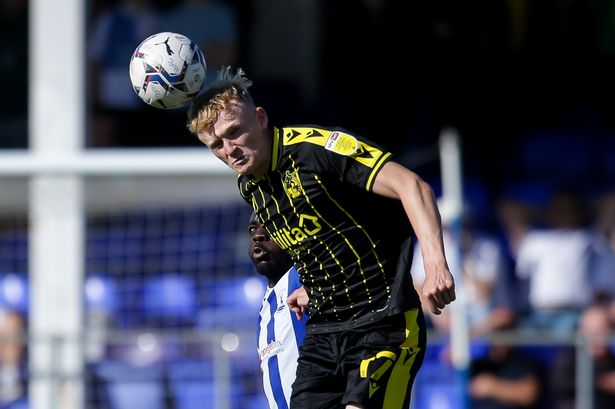
That part of his loan programme was purely because it’s going to test him in the air. The data told us the next stage of his development was going out on loan.
Where then compare other age groups against Emre’s U12s data. It just provides more information to us as staff to make a decision. But you have to also drill down deeper, certainly at the younger ages, to eradicate the birth bias, the early maturers who just get a natural advantage. But knowing that someone at 12 has performed this way, knowing that with the same programme, he [Emre] got to be around the first team in five years time, he must be doing something right.
George:
In Connor’s example, heading is probably quite ubiquitous in League Two, but are you looking for a team that will specifically help to improve that? Or would you be looking just for the highest level possible to test him?
Gareth:
We try to choose, but ultimately, we’re not the size of club where we can cherry pick who wants what.
So David Hibbert, our loans coordinator has a lot of contacts in the game and his own database of who’s looking for what in any transfer window, how they try and play, what they want their centre backs to look like, what shape they play. All those things so we knew through Clint Hill, too.
Connor had his non league loans, which were purely designed to get him playing in men’s football and toughen him up. We use those loans as a stepping stone, and to be fair to Connor, he took the opportunity with both hands and he was great.
We knew that Joey was looking for centre half at Bristol [Rovers] for the following season. So we put Will Forrester and him [Connor Taylor], at the time, to Clint, and he came to watch Connor for himself. Now they were the only club that came in for Connor, so we didn’t really choose there, but we knew Joey would be good for him and for his character.
It’s still a gamble because he’s got to get in the team. He wasn’t in the team at the start of the season. In preseason he had COVID too. But we knew that if he got it right, he’d improve. League 2 football is more direct, more opportunities to head the ball. I’m not doing League 2 a disservice there, but it is. We knew that if he got into the team, it would develop him.
We then had to make sure that he could cope off the pitch, [it was his] first time living away from home. We got the data every six weeks. What he’s done training wise, his loading, and then the metrics which we want to see, so we could track that.
George:
So you get his training data from Bristol Rovers as well, while he’s there?
Gareth:
Yeah. So we could monitor his loading, how he’s improving in the gym, how his counter-moving jump is improving, how his top speed is improving. If we needed to bring him back, if his load was low or he’s not improving the gym, we can maybe find a way that he misses Monday and Tuesday goes back there Thursday, Friday to get more gym work in, or whatever it needs to be.
We didn’t because the programme they put in place for him was fantastic. They’d send us through what they’ve done in that session. So, what extras had they done in the air, how much time he’s been defending, how much time he spent attacking.
We didn’t get their match data. We’d do our own. The guys, [and] Dave Pritchard, who’s in our match-analysis team, would clip out the metrics that we want to see for centre backs, just to track that he’s improving.
Coupled with that, we would try and watch him once every couple of weeks in person. So I went a couple of times. Kev went, Dave went, Rich Walker went. just different pairs of eyes checking in to make sure he’s OK.
George:
With talk around ‘no heading’ at academy level, is that becoming more of a deficiency for players? How do you feel that’s affecting them?
Gareth:
To be honest, I never worked on heading until I was 17 or 18 anyway, so we don’t put sessions on just for heading. There’s a mantra that there’s loads of heading in foundation phase, and that’s doing the coaches a disservice. They don’t practice it.
First team football is still played in the air, but you’re not going to need to experience that until then. Also, it’s an easy technique, in my opinion, to improve. If you’ve got desire to go and head the ball, that will counteract lack of technique to a point.

Long term, will it become more difficult? Possibly, but I don’t know many academies, even over the years, that have ever worked on it. Connor improved his in 12 months just by going to league two as a 20 year old. For me, that’s enough.
An under 16 who can’t head the ball [for example], we aren’t going to reject him because he can’t head it. That’s our job to make that better as he gets older. There’s more important things he needs to work on as a centre half.
‘What’s Not in There is Height’
George:
Centre half, specifically, is such a difficult position to pin down in terms of desirable metrics. You can say you’re looking for tackles, interceptions and blocks, but as an example, John Stones is in the bottom 10th or 15th percentile in league for those metrics. That’s solely because he’s playing for Manchester City, and no one would say he’s not a brilliant defender. How do you define what you’re looking for in a centre back in terms of statistics?
Gareth:
It’s a bit of everything. We sometimes struggle with trying to predict when the boys come out of City at 16. How good they are defensively? We’re not the club of the size of City that you can win games just by turning up. We understand our defenders have to have a certain level of competency out of possession.
But ultimately out of possession; it’s defensive duels, it’s successful tackles, it’s interceptions, aerial duels, blocks and then, most importantly, errors for goals. And then in possession; pass completion, line breaks, total receptions, attacking duels and then goals scored as well.
That should get an overall picture of our defenders. What’s not in there is height, because I think that is changing slightly. If you look at Ben Wilmot at 6 foot 1, he’s a completely different shape to Axel Tuanzebe, who is 6 foot 3 and built like a mountain, so I do think that is changing for certain teams.
Fundamentally those are the metrics that we want to see, alongside their physical data, if the counter movement jump is over 40 cm, that’s pretty good. If the top speed is pushing 10 m/s, that’s pretty good. Then changes in direction and things like that, knowing that if you’re a big lad, your changes in direction are going to be slightly worse compared to [a player who is] maybe 6 foot 1 or 6 foot.
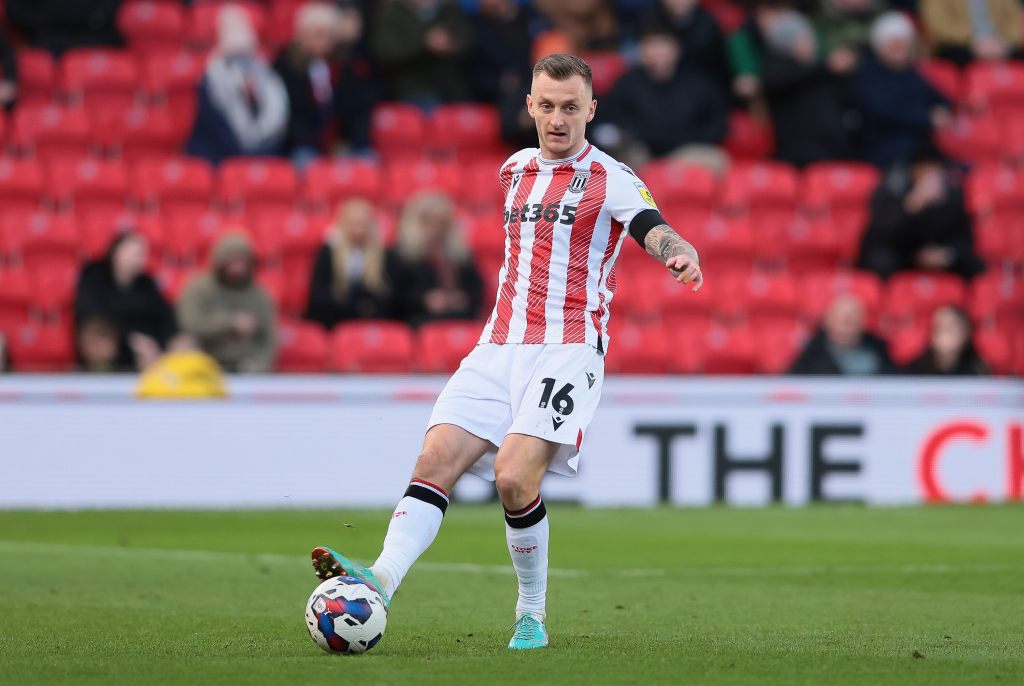
The difficulty is then trying to predict the things that you’ve not seen. So for a defender coming out of City, how much opportunity as you had to improve on his defending side of the game? I don’t know, because they’ve dominated most games and and go on to win most things at that level. Likewise for an attacker from City, if he’s only played a certain way, scored a certain type of chance, how does he look in our system? It can be difficult to predict that from a recruitment perspective.
George:
Is height brought into the equation at all? If I’m thinking about, say, Martinez at Manchester United who is 5 foot 9, there can be high quality but short centre backs. Is that something you think about at all or is it completely off the table?
Gareth:
We do think about it, but not to the nth degree. You obviously can’t have a 5 foot 5 centre back, it just won’t work. So the outliers, the real extremes, we don’t consider. Growth is a bigger question. So is he 5 foot 9, but a late maturer? So you know he’s going to shoot up, which is the Tyrone Mings example.
The metrics are more important than his actual height. There’s Martinez, there’s Puyol, there’s Cannavaro, there’s always centre backs who don’t fit that mould, but if you look at Martinez, his ball recoveries, his successful tackles, his defensive duels are all pretty good, his top speed would be pretty good, his counter-movement jump would be pretty good.
All those things put into the melting pot for our players will then predict hopefully that a player has a career in the game.
George:
Finally from me, it appears that since you’ve come in, you’ve really driven an increase in the use of data in the academy. How would you summarise your use of analysis and data within the department?
Gareth:
Currently we use data to analyse team performance, measure ourselves against the philosophy, measure improvement across age groups. We’ve introduced it individually to see how a player’s been performing against the position specific profiles too.
We also see how they compare against previous age groups and ultimately, how they compare against first team players, technically, tactically, physically and psychologically. That then might drive development plans. It might drive recruitment if we know somebody’s struggling to achieve the metrics that we want. It drives all those things, so that’s where we currently are.
And there we have it, thank you for reading the first ever Potterlytics interview!
Again, I cannot thank Gareth enough for his time. I hope you’ll agree that the points above are incredibly interesting, and this kind of window into the minutiae of football academies is something I’ve never experienced before.
It’s incredibly heartening to see that the academy is in the hands of someone with such a clear drive to improve and implement whatever will help young players, and I can’t wait to see the next steps they take.
On the Potterlytics side of things, I’m very much hoping that these interviews offering a window into football analysis and data as an industry will continue, and I’m actively working to find more Stoke City interviewees soon, so watch this space!
If you have any bits of content or interviewees you’d like to see, please do let me know either here or over on Twitter.
Thanks to any and all readers, and please feel free to comment and follow on Twitter at @potterlytics.
Should you wish to donate to help with the running costs of the site, and the data subscriptions we use, please feel free to visit our donations page here. Any and all help is very much appreciated!
George
 Potterlytics