

Well, here we are! I’m amazed to be saying this, but welcome to the first ever Potterlytics interview!
Let me introduce the inaugural guest on the blog, ex-Stoke, Port Vale, and Stockport player, among others, and having risen through the ranks of academy coaching, current Stoke City Academy Director, Gareth Owen.
As we sit down with a coffee in Gareth’s office, overlooking the pitches at the back of Clayton Wood training ground, the hustle and bustle of construction crews continue their work as we near the end of the first year of the five-year development plan.
After a good hour of conversation, delving into the work that the academy does with all age groups, it’s clear to see that Gareth has a true passion for the development of players.
We speak about the improvements in analytics and data collection over the past 3-4 years of his tenure, and he talks through the current implementation of this work with the players.
Each team has a post-match analysis document, all the way down through the groups to U12s, detailing some key metrics. There is a very clear focus on attacking intensity, with time in the attacking half and controlled entries into the final third determined.
Alongside this, as we saw in the Youth Cup YouTube video, there is a focus on winning the ball back high up the pitch, with the inclusion of regains and losses in each half.
It’s clear that there is an obvious goal for Stoke’s academy, and Gareth reiterates it several times. ‘Aggressive in and out of possession’ is the philosophy.
But enough setting the scene, let’s get into the meat of the interview. I present, Potterlytics meets… Gareth Owen.
The Conduit
George @potterlytics:
Thanks for speaking to me Gareth! Could you tell me a little bit about your role, in your own words, for the academy?
Gareth Owen:
I’m the Academy Director, and that means that I oversee the programme for the U7s to the U21s. With all the players, parents, and staff that associate with those age groups, and I link in the Academy players with the first team.
I see myself as a conduit between the two, trying to make sure that we have our own philosophy as an Academy, in how we want to play to develop players. But then [making sure that will] fit into the overall club philosophy and how the first team want to play.
My job is to work with heads of department, players, staff, the parents to educate them on that and then make sure the programme is delivered.
George:
You came out of your playing career in 2012/13, how did you find the transition into coaching? Was it an easy move?
Gareth:
Pretty easy! It was through choice. In my playing career, I was always making sure I had a number of avenues open, so that whenever the day to retire came, I had something to walk into.
I’d had enough at Port Vale at the time, a few injuries, frustration with professional football, the club had been through administration, and I felt I wanted to do something else. Something fresher and newer, to get my teeth into.
At the time I had a part time job with the PFA, working in the Education Department encouraging players to go and continue their studies, but then through contacts here, Stoke were advertising for a job as an U12s coach. I went through the interview process, and I was fortunate to get it as a part time coach leading U12s.
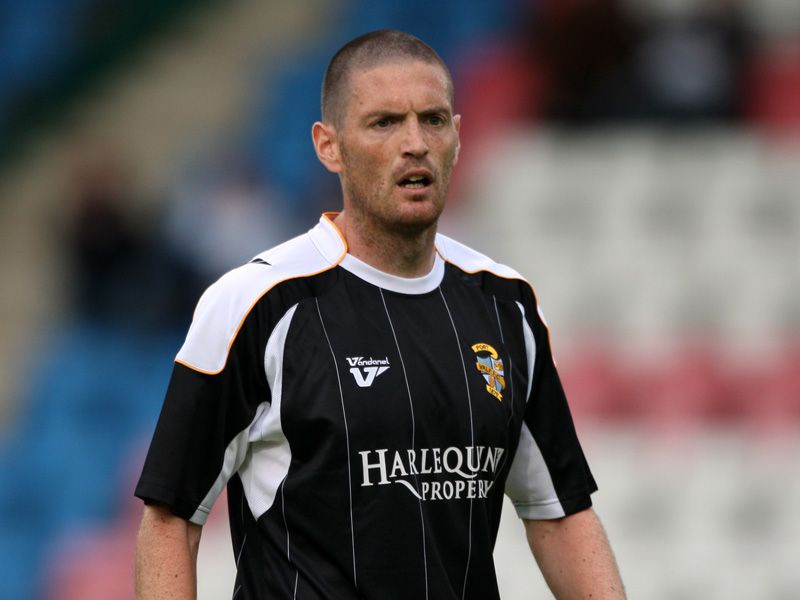
Coaching always fascinated me, and as a player I suppose I thought like a coach, because I wasn’t particularly quick. I was OK in possession. I was a competitor. I wanted to win. [But] because of the lack of pace sometimes, I’ve always had to try to find an advantage against my opponent. Likewise, managers that spoke tactically – Jim Gannon was one, Tony Pulis was another – I always listened to and managed to get on with really well.
Coaching was a natural direction. I didn’t know where it would go, I just cut my teeth in coaching. [I was] getting used to structuring sessions, how to work with individuals, and then the added difficulty at Under 12s is that you’re dealing with children, who are unpredictable. But it’s a decision that was easy and obviously one that’s been proven to be a good one!
‘That Competitive Edge is Still There’
George:
Did you find, possibly less so with U12s, but that there was a big shift in your tactical and technical thinking? Did you have to switch something in your brain to say ‘I’m now developing other people’ rather than focusing on your own game?
Gareth:
You try to, obviously! Certain games, [where] you get a last minute equaliser at Man United away, that competitive edge is still in there. But I saw the opportunity as a privilege because it was the first year of 11 v 11 football for them.
So you’re trying to introduce some basics to them of shape and structure, and build on the work that the FP (Foundation Phase) guys have done around skill development, and [working out] how that looks within the team. [Still] knowing that they’re children so they want to be entertained, they want the enjoyment.
Part of our role as Academy coaches is developing the individual more so than the team. However, you do need the team around you playing in a certain way that’s going to develop individuals.
That U12 year is tough, because they’ve got two more players on the pitch, they’re starting to find out about positions, but [the] most important [thing] is putting sessions on that they enjoy, but that also develop them individually.
‘They Want That Information, That Stat, That Tactic’
George:
Now it wasn’t that long ago that you were in youth football yourself. How has that changed since the late 90s, early 2000s?
Gareth:
It was still there. My youth team Coach was Dave Kevan, I had him for the first time at Stoke all the way through, bizarrely, even at the reserve team level with the first team. It’s probably just more formal now.
[Nowadays] they train with us more than they do in the playground, whereas ours was slightly different. We probably played more in the playground than we did train for the club.
But Dave still did the individual specific practices. He still pulled individuals to one side to work on their heading in my case. When I was down the ages he saw strength and weakness that I needed to get better at if I was to have a career. What he didn’t do is he probably didn’t document it as a session plan, with 15 minutes dedicated to this, telling the player so much that you’re doing that, et cetera.
I think players, society and children were different then than they are now. Now they want that information. That stat, that tactic, that individual development work, or those clips of that’s what we’ve seen in a game.
Whereas way back when, you just pulled somebody to one side and said ‘just give me 15 minutes on your heading’.
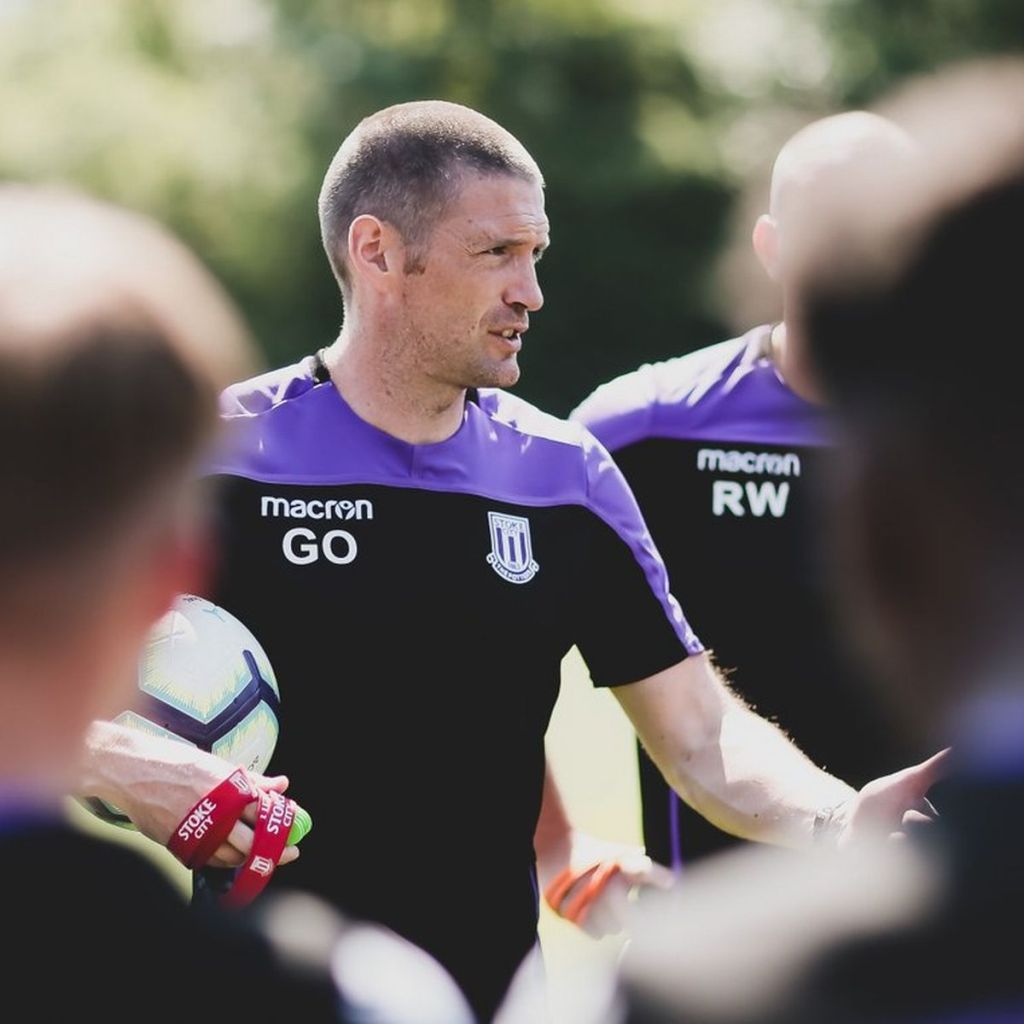
Now you need to evidence it to try and motivate them to do it. The good ones, the driven ones, will do it naturally, because they understand the game maybe a little bit more than others, but some might just need a target to aim for, to really go ‘right, you need to focus on this, your 1v1 duels need to be up around 50 to 75% if you’re gonna be successful at the next level’. And we do that with the young players now.
So that’s where there’s a slight change, but in fairness to Dave and youth team coaches, they were still doing individual specific coaching, just in a different way.
George:
To what level do you use those data and analytics, with younger players and through the age groups?
Gareth:
We drip feed it in straight away. Not so much at 9s and 10s, that’s about having fun, finding out about yourself, finding out about team football, and finding out about organised Academy football. [We tell them to] just go and try things, knowing that they’ll get it right, they’ll get it wrong and [we] respond the same.
At 11s or 12s we start putting those things in. A lot around the individual, like 1v1 duels, chances created, goals scored, 1v1 duels against, winning the ball back. Things like that.
We do that individually and we also do it as a team, because if our philosophy is about being aggressive and in out of possession, there are certain metrics that we want all our teams to be improving on as they go through the age groups.
The players might not necessarily get all that information, but the coach will. They need to be making sure that they’re putting sessions on that are developing those metrics that we want to see, like time in the attacking half, ball retention, time in the attacking third, time playing out, controlled final third entries, all those little things that tell us that the teams are playing how we want.
The Head of Coaching will track that over the course of the season, and I’ll probably track the individual development around the metrics we want to see.
‘Football Shouldn’t Define Them at That Age’
George:
So how do you develop that? If you have, for example, a player who comes in at 12 from the FP, how do you plan out their route to, if you’re being optimistic, the first team?
Gareth:
Each player has his own individual development plan, [showing] what he’s good at and what he’s not so good at, and then some position specific information in there. So if it’s a right back, it’s a right winger, if it’s centre midfield player, what key metric do we think is going to really make a difference in their development.
But then also we try to get them to focus, not just on that, but something off the pitch as well. So it might be to learn guitar, because we want to develop rounded individuals. We don’t want them constantly bogged down with stats and football, they’re still children. They have to develop and have other interests and be, not little Johnny the footballer, but little Johnny playing football for Stoke City [who is also] a mathematician or whatever else. Football shouldn’t define them at those ages, so we tried to get them to think of other things.
Then over the course of the season, they’ll have reviews every six weeks around the metrics for their chosen position, how the team’s done and then information we can then feed back targets to the parent and the player for that cycle.
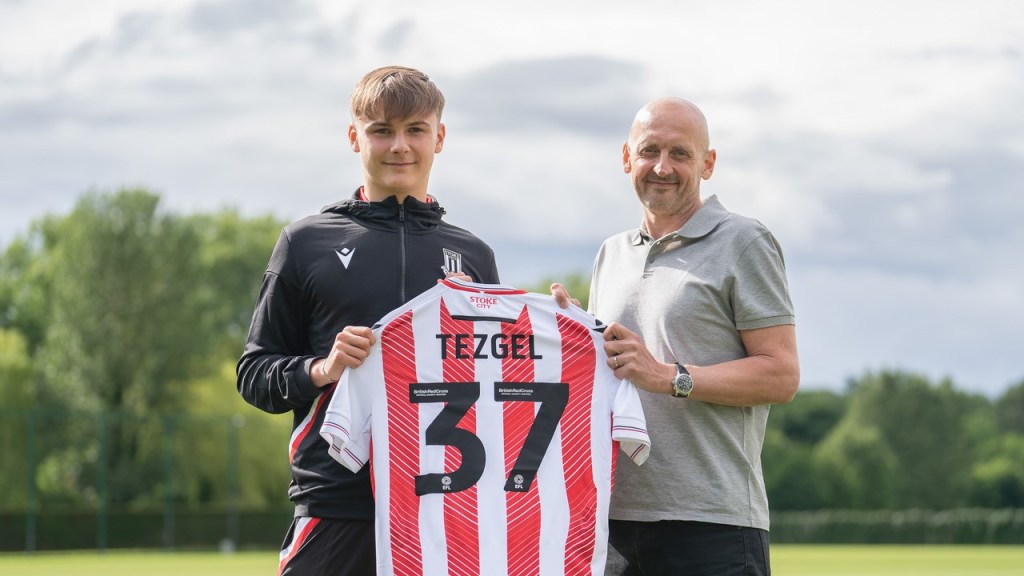
We don’t necessarily map them to the first team, but what we try to do, from this year [onwards], is see how they compare to previous U12s. We’ve had some success recently in the Academy with Emre [Tezgel], Nathan [Lowe] and people like that, who’ve come through our age groups. We’ve got information on Emre at U12, e.g. goals scored, chances created, ball recoveries, hold up play, those types of things.
So with our under 12s currently, we can ask ‘where is he compared to that?’. That’s in his infancy because those players [Tezgel & Lowe] are just getting there [to the first team] now. So we do that on the pitch and then we also do it physically as well, so their top speed, their counter-movement jump, their change in direction.
It is still a little bit of guesswork because you might have an U12 who is a late maturer, Emre might have been an early maturer, so naturally had an advantage at 12 and 13. You try to build in the date of birth, training age, maturation, social development, psychological development, and home life. You provide loads of information about that individual to try to predict the future. It’s not easy.
‘You’re Never Going to Create the Perfect Player’
George:
I can imagine! You talked about using Emre’s or Nathan’s stats. I was going to ask what point do you choose a position for a player, but even within that, how do you kind of build in the fact that some strikers are Emre Tezgel, some strikers are Peter Crouch, some strikers are Jacob Brown? How do you build in that variation, both in position and in player roles as well?
Gareth:
If a scout’s going to send a player in, he must have seen him play in a certain position, or traits that suit a particular position.
We’ve had left wingers in who’ve struggled as a winger, but during the course of a trial period or an observation period, we’ve gone ‘his 1v1 out of possession is really good, so let’s try him as a full back’. But fundamentally a player must have been seen in a position and that’s the same at 9s as it is 18s and 21s.
We’re not too fixed at 9s to 12s, we want them to find the game out and things like that, but ultimately as staff [we] need to see them standing out in a certain area with a certain trait.
There’s no point really forcing [a player to play] right winger if we know his chances created is nothing. Now, it could be because he’s a late maturer, back to the conversation we just had, or it could just be that he’s not good enough. So we do try and have them in positions as soon as they can, knowing that at 9 to 12 you’re going to find loads of things out. But also if we’re trying to create top players, they’ve got to be good at both, because we’re not a team that’s always going to dominate possession. So we can’t just look at what players do in possession, but likewise, we want to be aggressive in our possession to control the games, so they can’t just be good out of possession either.
We try to have players that are comfortable in doing all those things, in and out of possession and the physical metrics they need to play at Championship and at the top level. We don’t just focus on one thing or the other.
We know that a player will have a particular strength, so Emre’s is around his hold up play, his chance conversion rate, and his tactical understanding, but we know physically he won’t be as quick as someone like Tyrese Campbell. What we need to do is to make him quicker so that he can bridge that gap, with other metrics that might be even better.
You’re not going to create the perfect player that is 100% in everything in possession, out of possession and also a sprinter, et cetera. It’s maximising their strengths, because our recruitment team and us as coach have seen something in him that we think suits professional football.
That is data-driven and also opinion driven. It’s ultimately up to us to put a programme in place that maximises their strengths. How can we make them stand out? How can we hide their weaknesses in a certain way? Not [in a way that] we’d cover over them, because they’d resurface again at some point.
We just need to make sure that they are improving in that area as well. We’ve had some success in that in recent years.
That’s it for Part 1! Follow and subscribe to be notified of our posts!
Part 2 is available here: Part 2
Huge thank you to Gareth Owen and the staff at Clayton Wood for the very warm welcome.
The conversations and interview above were of great help to me as someone just starting in football, and hopefully you, as readers, enjoy this insight as much as I did.
Please remember to check out Part 2, and my other work on the site!
Thanks to any and all readers, and please feel free to comment and follow on Twitter at @potterlytics.
Should you wish to donate to help with the running costs of the site, and the data subscriptions we use, please feel free to visit our donations page here. Any and all help is very much appreciated!
George
 Potterlytics