

Well, that was a lovely Friday night, wasn’t it?
Stoke finally seemed to, for 85 minutes at least, throw off the shackles of their home form and throw aside the curse of the game after a good performance.
A 3-2 win didn’t reflect the dominance Stoke had over the course of the game, but 4 wins from the last 6 league games does reflect the progress they seem to be making over the first few months of 2023 under Alex Neil.
The newly-found 4-3-3 of the past month or two has led to some of the most consistently promising performances from a Stoke side for several seasons.
But just what is this apparently refreshed Stoke side doing differently? What has caused this upturn in form?
Well let’s take a look at some of the characteristics we have seen, particularly in the last match.
Under Pressure
The most obvious change we’ve seen is how Stoke press their opposition. The high press has been tried several times this season, but it’s only recently been getting the results to match the performances.
We saw, against Swansea, Stoke’s wide men pressing areas, ready to push up, while the central striker pressed the ball and the rest of the team marked man to man.
A version of this continued against Blackburn in some periods, but also often dropped into a more conventional 4-4-2 shape out of possession when pressure wasn’t so intense.
It’s nearly impossible to press aggressively, and high up the pitch for 90 minutes, so Stoke’s calmer out-of-possession shape allowed them to remain compact while retaining energy and still providing chances to win the ball back.
Interestingly enough, in the early periods of the game, Tyrese Campbell was not pushed forward as aggressively as Brown and Gayle, and sat deeper in the half space, marking Blackburn’s inverted right back out of the midfield.
We see an example of this in the first minute of the game, as Blackburn’s keeper gets the ball from his centre back.
Click each image to zoom in

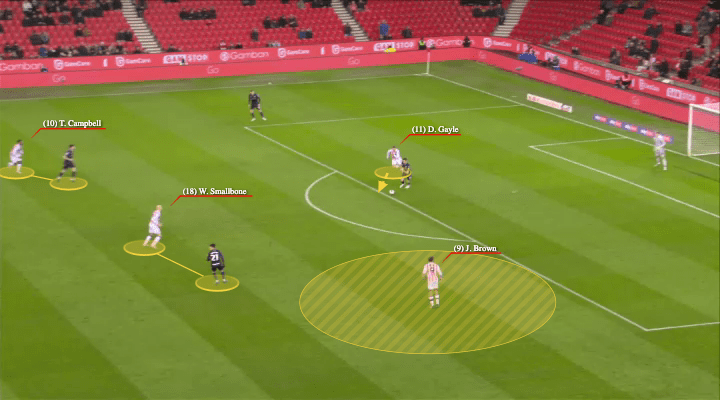
The Blackburn keeper holds the ball. Similarly to the Swansea game, we see Gayle pressing the ball directly, while Brown sets a trap for the ball to the left, and Smallbone marks the midfielder dropping deep.
As the keeper plays the ball out, however, we see the difference.
This time, Campbell isn’t marking an area like Brown on the right hand side. He’s dropped deeper to man-mark Rankin-Costello, the right back who has inverted into the midfield to create a numerical advantage and help play through the press.
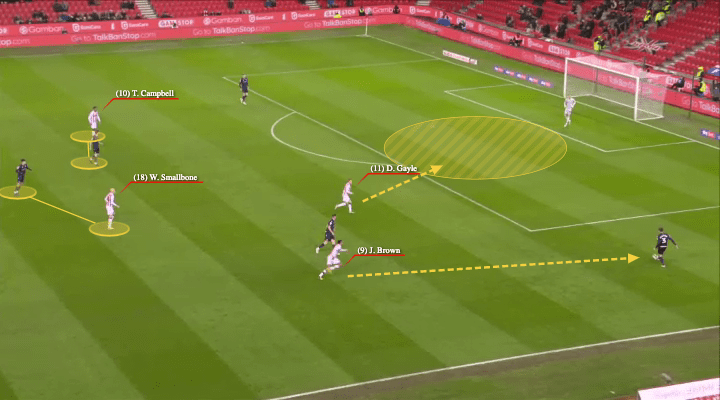

As the ball gets moved to the left, Brown’s trap springs, and he rushes to press the player on the ball. Gayle moves to cover the space across the box, and Smallbone/Campbell continue their man-marking missions.
Again, the ball moves all the way across to the right, and Campbell remains on the inverted full back, allowing the centre back to bring the ball forward, whilst Gayle moves to press and the central passes are marked.
This switch in focus from Campbell kept the press from being overrun by passes through the middle, and allowed Stoke to keep the upper hand while Blackburn persisted with their patient possession.
Can We Build It (Yes We Can)
More interestingly, however, Alex Neil appears to have reintroduced the build-up phase that he binned off at half time against Sheffield United in January.
Particularly noticeable in the away game at Blackpool, Stoke have started to be much more patient on the ball with their defenders, in an attempt to draw out opponents.
The passing is, like the pressing, much more brave, and we saw the fruits of that bravery and confidence against Blackburn on Friday.
Let’s look at an example. Click each image to zoom in.
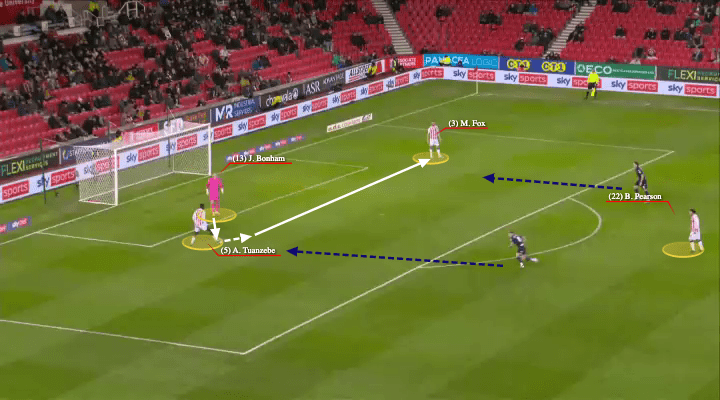
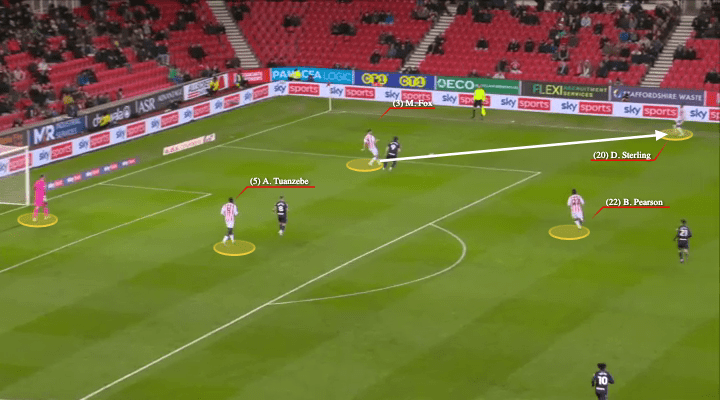
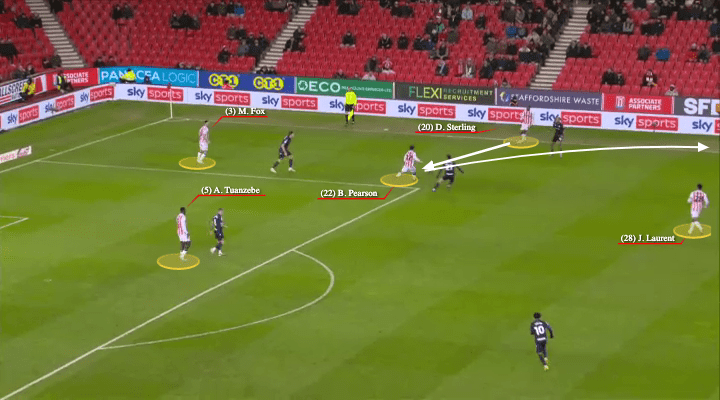
This is a goal kick around 10 minutes into the match. Bonham plays it to Tuanzebe who is barely outside the 6 yard box. He plays it across the box to Fox, who turns and lays it wide to Sterling.
At this point, Blackburn feel their trap has been set well, as Sterling is pressed and he is forced to play another risky ball inside to Pearson.
This is where Stoke’s bravery leads to rewards.
Pearson plays a lofted pass (note, lofted pass, not long ball or hoof) forward into Dwight Gayle, who has been occupying the space behind Blackburn’s press, against their back line.
Click each image to zoom in


As Stoke have bypassed the first line of the Blackburn press, there is now a large space behind Gayle.
He nods it back into that area for one of the game’s danger-men, Tyrese Campbell, to attack.
He drives into the open space, 50 yards towards the opposition goal, and lays it into Smallbone’s path, who has continued running in the space.
Smallbone hits the bar from the 1 v 1 chance, but this was a great example of Stoke forcing artificial transitions by slowing down the play at the back, and switching to high tempo play quickly to exploit the space behind the Blackburn press.
Whilst we’ve seen a lot of the traditional transitions mentioned above from Stoke in the past 6 or so games, we’ve not seen so much of this quality play from the back.
7 minutes later Stoke get another goal kick, and work a similar situation.
Click each image to zoom in
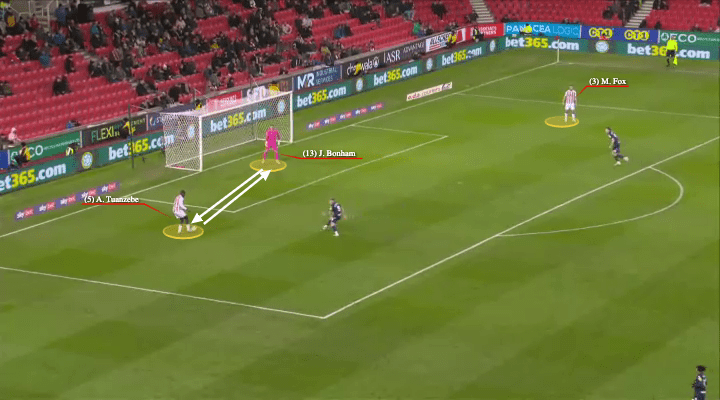
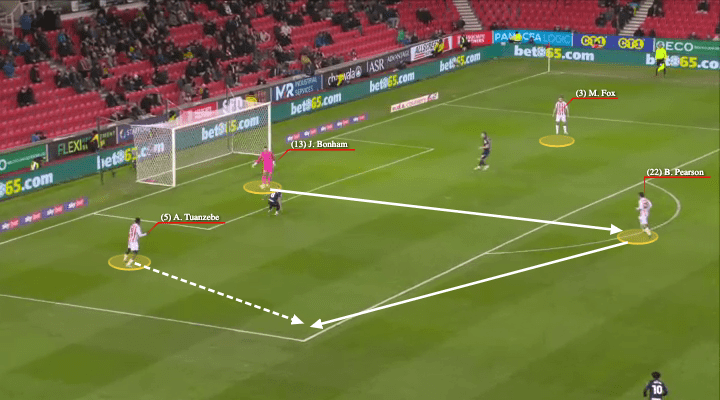
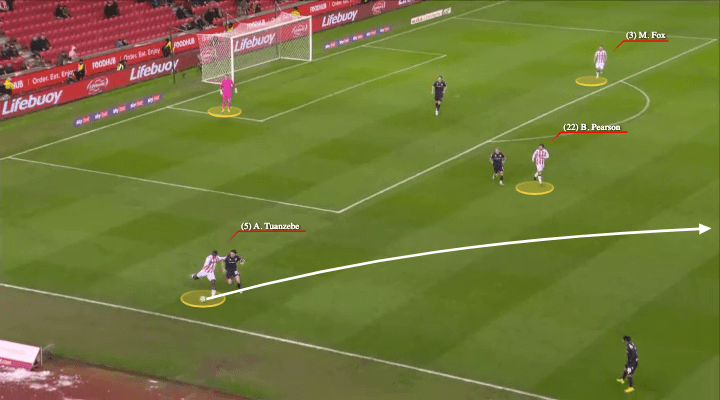
Again, Bonham takes a short goal kick to Tuanzebe, and this time Blackburn press much quicker to prevent the out ball.
Tuanzebe is forced to play the ball back to Bonham, who was calm in possession all game.
He plays the ball immediately into Pearson, who has dropped into the centre of the D, and this makes space for the ball back to Tuanzebe, in the corner of the Stoke box.
Once again, Stoke play a lofted pass into the front line, where Brown has dropped off a defender to collect.

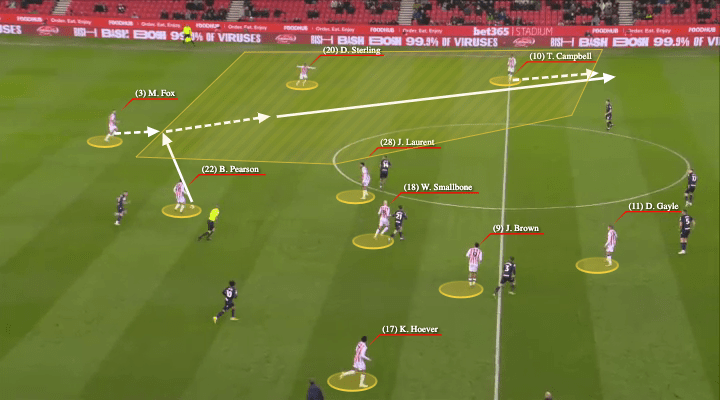
Brown lays it back into the space behind the Blackburn press, where Pearson can play it left into Fox.
Stoke have created a large area of space down the left, and Campbell pushes forward with the ball where the attacks breaks down.
Both of these serve as a testament to Stoke’s improvement in playing through opposition pressing play, and specifically to their ability to create space against sides who put pressure on the back line in the last month.
While this type of build-up happened several times, Stoke also varied their build up significantly, playing lower tempo for longer periods when in the lead and in possession higher up the pitch, and playing the ball forward much quicker to give Blackburn more varied problems and generate threat from winning second balls high up the pitch.
Click each image to zoom in.
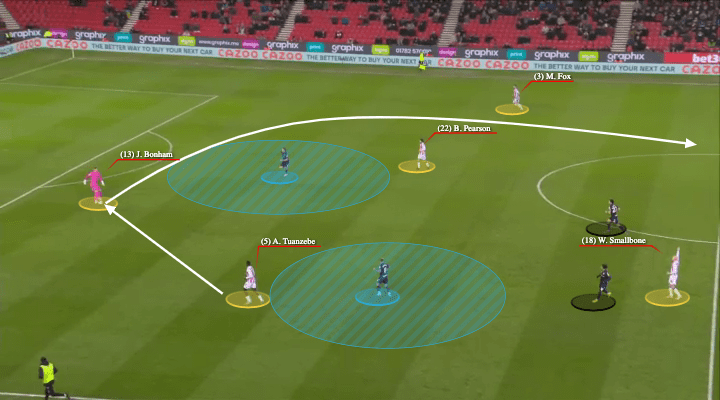
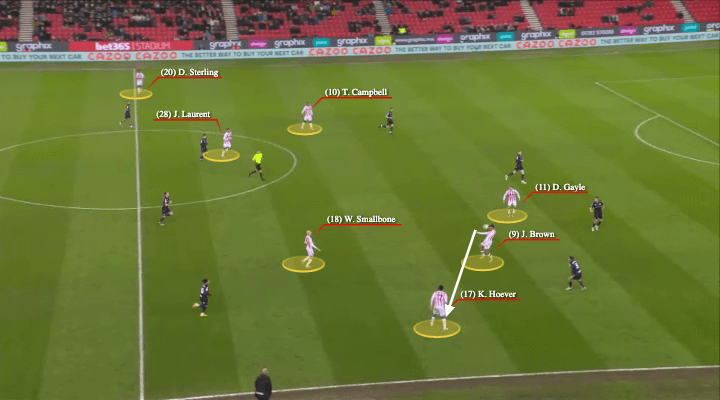

This time, as Bonham receives the ball from Tuanzebe, there is no worthwhile pass available for him.
A pass back to Tuanzebe would put him under pressure, and passes to both Fox and Pearson are blocked by the Blackburn pressing forward.
Instead, he hits the ball long, bypassing two lines of pressure and reaching Jacob Brown. Brown nods the ball to Hoever, who plays it inside to Smallbone and Stoke can break forward.
4 players begin charging in behind the Blackburn defence to create space and options for Smallbone, and although the move breaks down with his pass to Gayle, this type of build-up presents another problem for Blackburn’s defensive press and back line to deal with.
The greater the variety in how you break an opposition press, the more difficult it is for them to prevent your build-up play leading to chances.
Thanks to any and all readers, and please feel free to comment and follow on Twitter at @potterlytics.
Should you wish to donate to help with the running costs of the site, and the data subscriptions we use, please feel free to visit our donations page here. Any and all help is very much appreciated!
George
 Potterlytics